A strong impact can change more than the condition of a single tooth. The same force that cracks or moves a tooth can also affect the socket holding it in place, the surrounding bone, the way the teeth meet, or the jaw itself.
That distinction changes the dental evaluation.
When both the tooth and jaw may be involved, the dentist has to determine whether the damage is limited to the tooth structure or whether the impact has also changed its support, position, or relationship with the rest of the bite.
How Tooth and Jaw Injuries Can Show Up Together
A patient may first notice the obvious problem, such as a fractured tooth, but other symptoms can point to a broader injury.
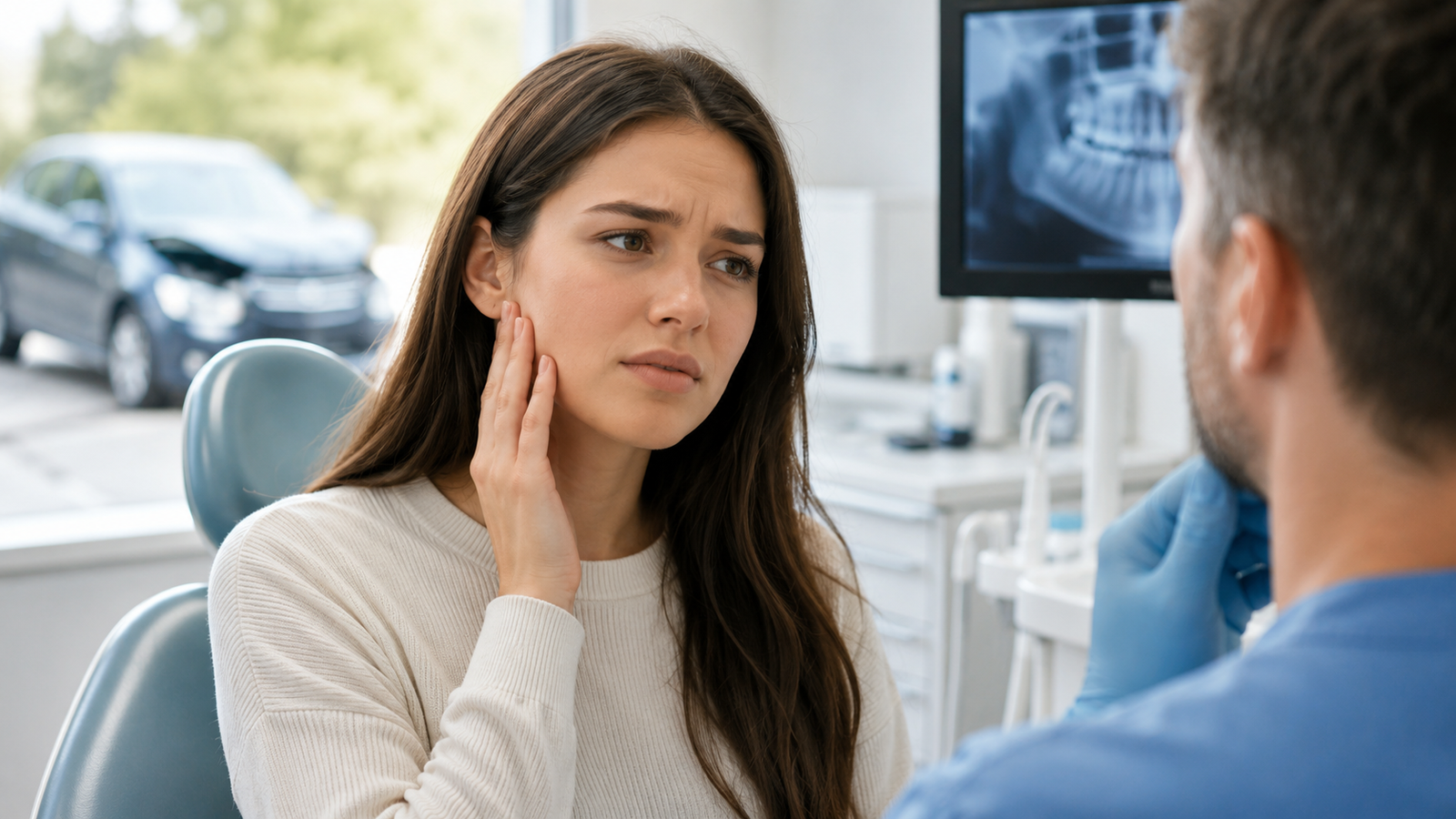
A tooth may feel loose or sit slightly differently after the accident. Biting down may suddenly feel uneven. The jaw can become sore when chewing or opening, or the patient may notice that the mouth does not open as comfortably as it did before. Some patients may also develop jaw clicking or popping after an accident, particularly when the impact has affected how the jaw moves or how the teeth come together.
The location of the symptoms matters. Pain isolated to one damaged tooth tells the dentist something different from jaw pain after an accident or discomfort that appears when several teeth come together.
The mechanism of the injury also. A direct blow to a front tooth, for example, creates a different pattern of force than a collision that causes the jaws to close suddenly against each other.
Understanding that pattern helps the dentist decide which areas need closer attention.
Why the Bite Becomes Part of the Exam
When the jaw and teeth absorb force together, the bite can provide useful information about how the injury affected the mouth.
Teeth are designed to meet in a particular relationship. If one tooth has shifted, part of the supporting bone has been injured, or the jaw is no longer moving normally, the patient may notice that contact has changed. Even subtle bite changes after an accident should be evaluated because they may reflect changes in tooth position, pressure distribution, or jaw function.
The dentist may look at whether one tooth hits before the others, whether the injured tooth moves under pressure, and whether opening or closing the jaw produces pain or restriction.
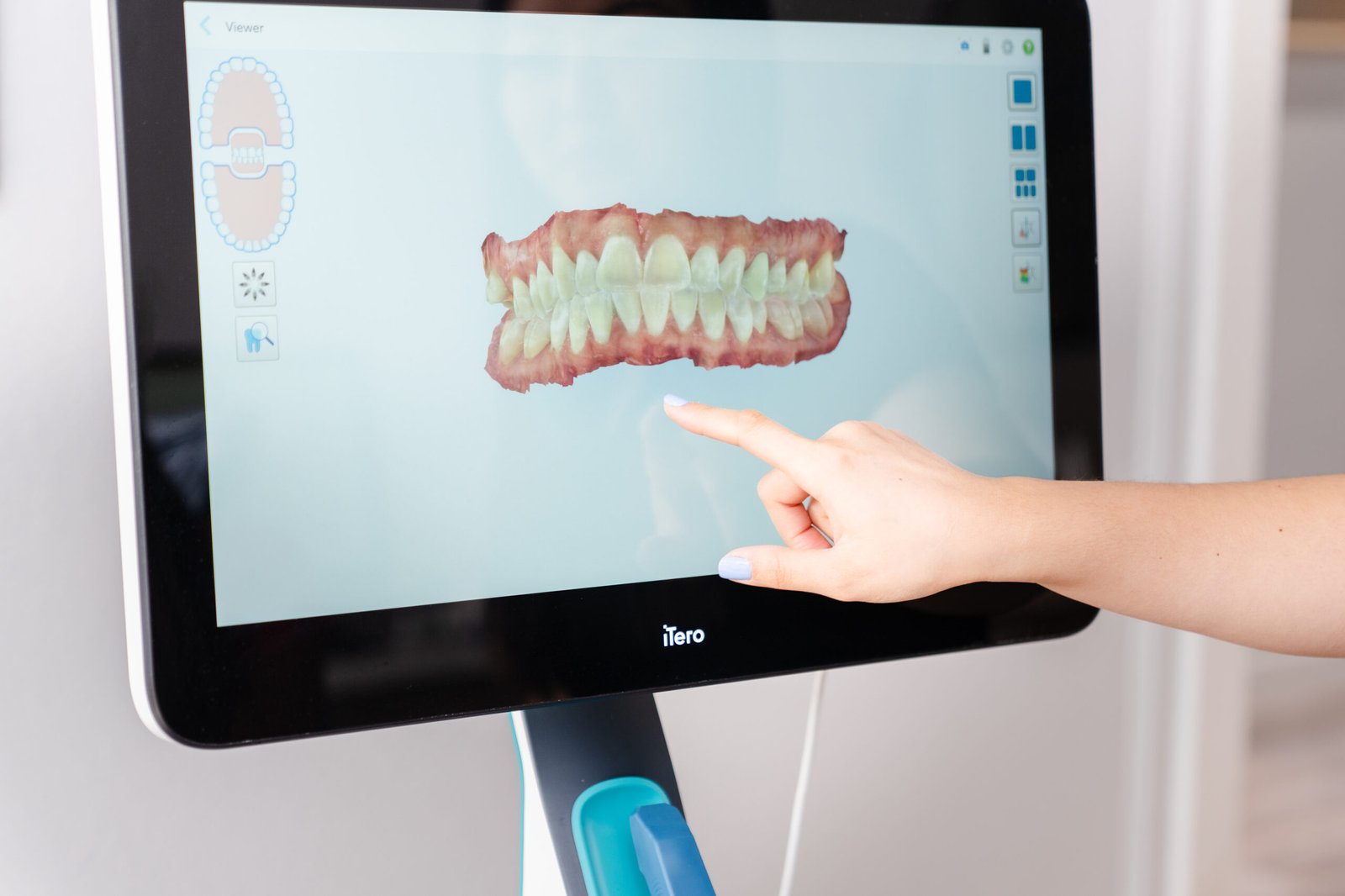
Imaging can add information when the exam suggests that the roots, bone, or jaw structures may be involved. In some trauma cases, 3D imaging can help evaluate dental damage beneath the surface when a closer view is clinically appropriate. The purpose is to understand how the injury has changed function, not simply to repair what looks broken.
When the Jaw Injury Changes the Dental Treatment
A tooth that is structurally damaged but otherwise stable may be treated differently from one that has also been displaced or lost support around the root.
If the tooth has moved, restoring its shape may not be the first priority. Stabilizing the tooth before final treatment may be necessary so its position, supporting tissues, and healing response can be evaluated first.
Jaw or bite involvement can also influence how quickly restorative treatment moves forward. If the teeth are not meeting normally, placing a permanent crown or rebuilding the tooth too early may create additional bite problems.
In more significant injuries, dental treatment may also need to account for jaw movement, multiple affected teeth, or whether another provider should evaluate concerns outside the scope of the dental injury.
The treatment sequence depends on how the tooth and jaw are functioning together after the impact.
When a dental injury involves both the tooth and the jaw, the visible fracture is only one part of the clinical picture. A changed bite, difficulty opening, tooth movement, or jaw tenderness can affect how the dentist approaches the repair and what needs to happen first.
If you notice tooth damage along with changes in your bite or jaw after an accident, contact the brush365 Dental Injury team for an evaluation. A trauma-focused exam can determine which structures were affected and how the injury should be treated as a whole.