Dental injury care requires a balance between moving quickly and getting things right. Injuries need to be evaluated early so they do not worsen, but treatment also has to be precise enough to protect long-term function. That balance is not always easy to achieve without the right tools in place.
At brush365 Dental Injury, technology helps create a clearer understanding of what is actually happening from the beginning. Dental imaging is not limited to what can be seen on the surface. When appropriate, 3D scans provide a more complete view of the teeth, surrounding bone, and jaw joints. This makes it easier to identify fractured tooth treatment, subtle displacement, or joint involvement that might otherwise go unnoticed.
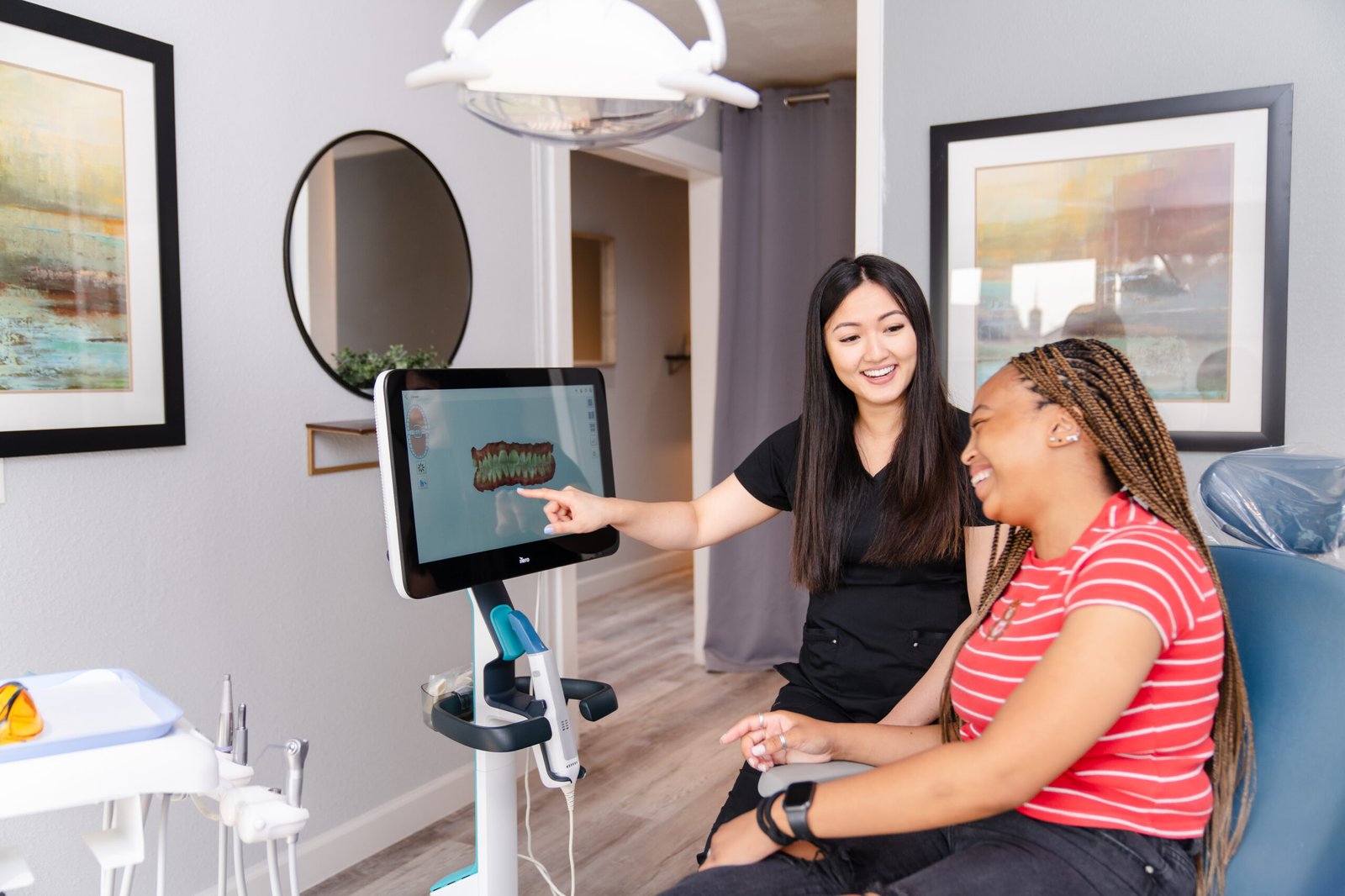
Digital scanning also plays a role in how the bite is evaluated. Instead of relying on traditional impressions, a digital model captures how the teeth come together in a way that is both accurate and more comfortable for the patient. That level of detail matters in trauma cases, where even small changes in alignment can affect how the mouth functions over time.
The goal is not simply to gather more data, but to understand the injury more fully before decisions are made.
Restoring Damaged Teeth Without Unnecessary Delays
When a tooth has been structurally compromised, timing becomes more important. In traditional workflows, restoring a tooth with a dental crown treatment after injury often requires multiple visits. Impressions are taken, sent to a lab, and the patient returns later for final placement. During that period, the tooth remains in a temporary state, which is not always ideal, especially after trauma.
With in-house digital systems, that process can often be condensed. Same-day crown technology, including Fastmill systems, allows crowns to be designed, fabricated, and placed in a single visit when the situation allows for it. This reduces the time a tooth remains unprotected and limits the number of appointments needed to complete treatment.
For patients who are already managing other aspects of recovery, fewer visits make the process easier to keep up with. It also allows care to move forward without unnecessary pauses, which can matter when the goal is to stabilize the tooth and restore function as soon as it is appropriate.
Using Technology to Support, Not Replace, Clinical Judgment
Technology plays an important role in injury care, but it does not replace clinical decision-making. Each case is still evaluated on its own. Some injuries benefit from immediate intervention, while others need to be monitored before final treatment decisions are made.
The advantage of using advanced tools is that those decisions are made with better information. Imaging provides a clearer view of structural damage. Digital workflows improve how restorations are designed and placed. More efficient processes reduce the need for repeated visits and help patients move through treatment with fewer interruptions.
Used properly, technology supports both accuracy and efficiency without forcing either one. It allows care to be delivered in a way that is deliberate, well-informed, and easier for patients to navigate.
If you have sustained a dental injury and want an approach that prioritizes both precision and practicality, contact brush365 Dental Injury to arrange a dental injury evaluation. We will assess your condition carefully and guide you through treatment with a clear and well-supported plan.