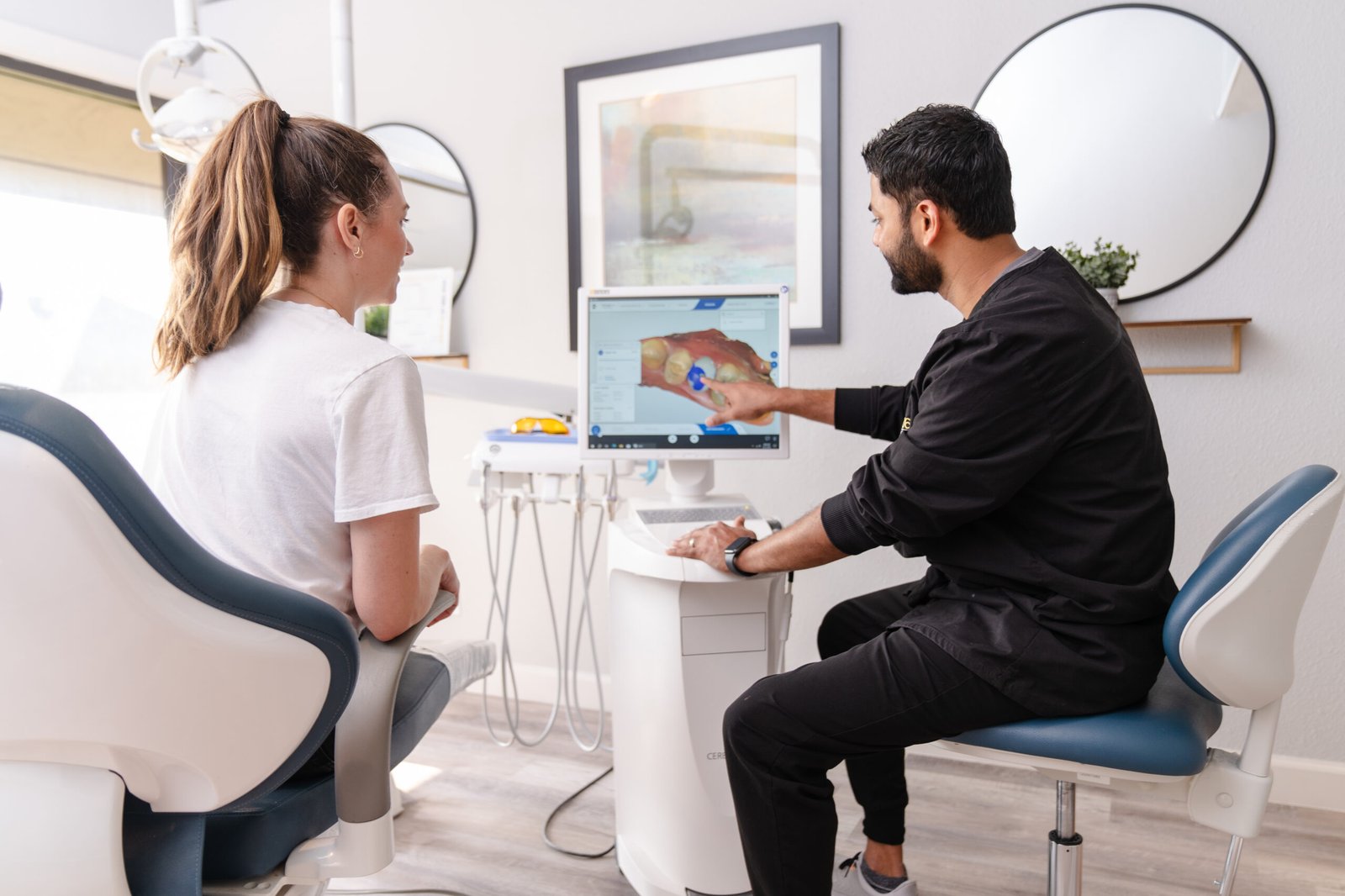
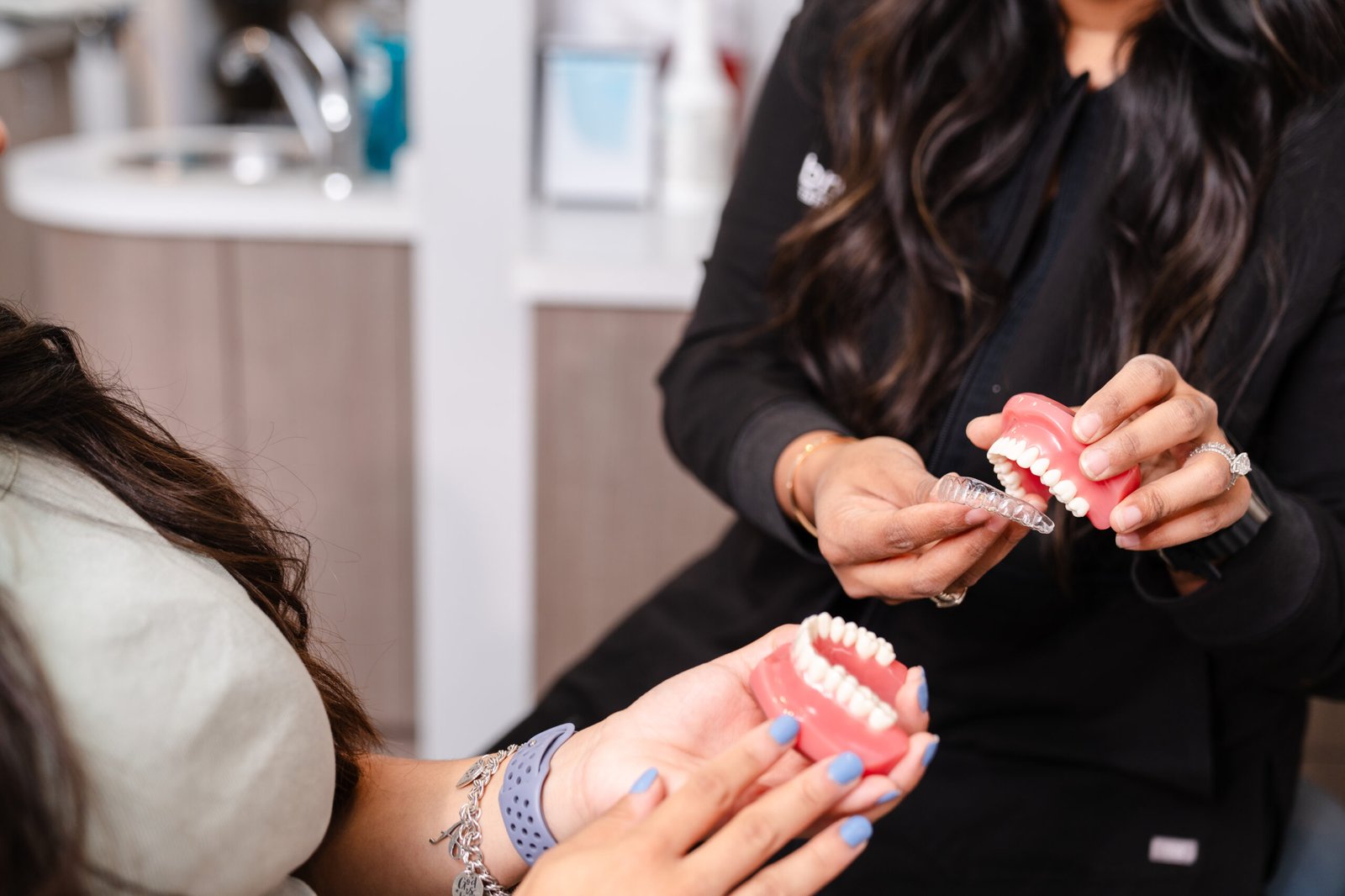
After a dental injury, your dentist may ask you to bite down several times during the first visit and again at later appointments.
It can seem repetitive, especially when the injured tooth already looks stable. But the way your teeth come together can change as swelling decreases, a displaced tooth settles, a splint is placed, or restorative treatment is completed.
Repeated bite checks help show whether the injured area is returning to a stable position or whether something is still interfering with normal contact.
The First Bite Check Shows What Changed in the Accident
A dental injury can alter the bite even when the difference is small.
A tooth that has shifted slightly may contact the opposing tooth earlier than it did before. A bruised periodontal ligament can make a tooth feel higher or more tender when you close. A fractured filling, crown, or tooth surface can also change where pressure lands. Even subtle changes in how your teeth meet can indicate an underlying injury. Learn more about why bite changes after an accident should be evaluated.
During the initial evaluation, the dentist may ask you to close slowly and describe what feels different. You might notice that one tooth touches first, that your front teeth meet differently, or that chewing pressure feels uncomfortable in one area.
Those details help the dentist understand how the injury affected tooth position and function.
A sudden inability to bring the teeth together normally after significant facial trauma can also point to a more serious jaw or supporting-bone injury and requires prompt assessment.
The Bite Can Change as Treatment and Healing Progress
The way your teeth meet immediately after an accident may not be the way they meet several days later.
Swelling and tenderness can temporarily affect how you close your mouth. A repositioned tooth may need time to settle within the supporting tissues. If a tooth has been splinted, repaired, or restored, its contact with the opposing teeth also needs to be checked after treatment. In some cases, stabilizing an injured tooth is an important step before proceeding with final restorative treatment.
This is why one bite check is not enough. A tooth that felt high at the first visit may become more comfortable as inflammation decreases. On the other hand, a repaired tooth may begin receiving too much pressure once normal chewing resumes.
Repeated checks allow the dentist to see how the bite is changing rather than making permanent adjustments based only on what is happening during the earliest stage of recovery.
What Dentists Are Looking for During Follow-Up
A follow-up bite evaluation is less about whether the teeth simply “fit” and more about whether the injured area is tolerating normal function.
The dentist may look for a tooth that contacts too early, continued tenderness under pressure, movement in an injured tooth, or a restoration that no longer feels balanced with the rest of the bite.
Patient feedback is especially useful here.
If one tooth feels like it hits first, chewing has become uncomfortable, or your bite still feels different from before the accident, mention it even if the change seems minor. Those sensations can help direct the examination.
Bite findings are considered alongside the rest of the injury. A tooth that hurts when chewing could have a ligament injury, fracture, pulp problem, or another issue that requires additional testing.
This is one reason follow-up care after dental trauma matters, even when the initial examination shows that the injured area appears stable.
Bite Stability Is Part of Knowing When the Area Is Ready for Normal Use
As recovery progresses, the dentist may gradually determine whether the injured teeth can tolerate more normal chewing.
A stable bite does not guarantee that every part of the injury has healed, but it provides useful information about tooth position, restoration fit, and how pressure is being distributed through the affected area.
Bite changes can also influence which treatments should happen first. Understanding the treatment order after a dental injury helps explain why dentists evaluate the full injury before making final adjustments.
If discomfort increases, a tooth begins moving more, or the bite suddenly changes between appointments, the area should be reassessed rather than waiting for the next scheduled visit.
If your bite feels different after an accident or you are undergoing treatment for an injured tooth, contact brush365 Dental Injury for a bite evaluation and trauma follow-up. Rechecking how the teeth come together helps ensure that treatment continues to support stable, comfortable function as healing progresses.